
Scenario Planning

Our project is built around scenario planning. It gives us a wider view of the issues facing the region, and informs our toolkit contents.
Below is an introduction to Scenario Planning. After reading, visit our scenarios by clicking the button below.
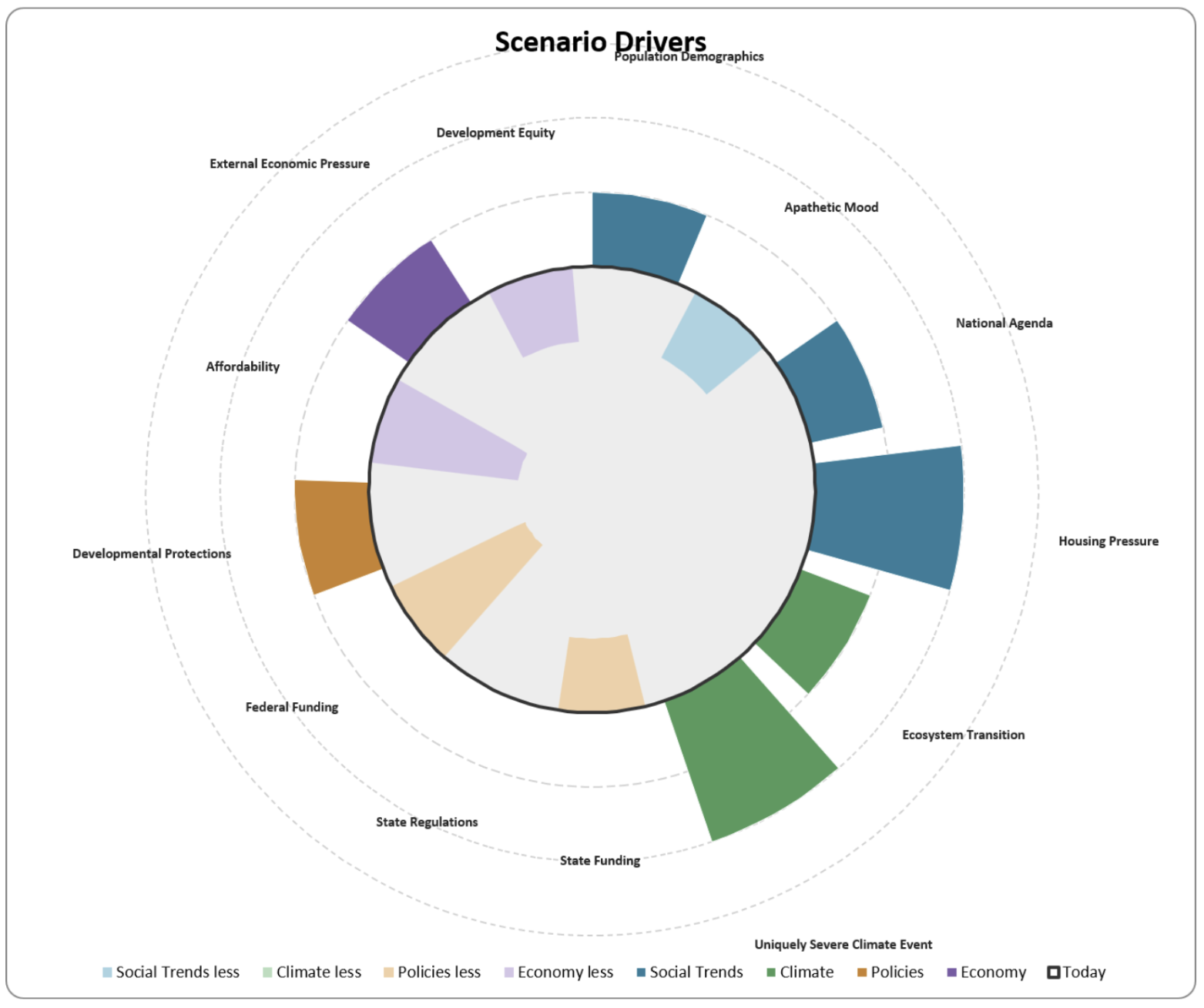
What is scenario planning?
Planning usually involves forecasting, where the most likely future depends on the current trends and status quo. This type of planning focuses on how we will use our limited resources in the future, but only with the knowledge of the present. This is an extremely narrow scope that can cause blindspots. No one forecasting in 2019 planned for a global pandemic, and no one in the Berkshires knows what state budgets, federal aid, or the climate will look like in 2050.
Scenario planning starts from a more honest place. It is a structured process decision makers use to prepare for plausible future conditions rather than one single future. Instead of asking what will happen?, we ask what could happen, and how can we best set ourselves up no matter the case?
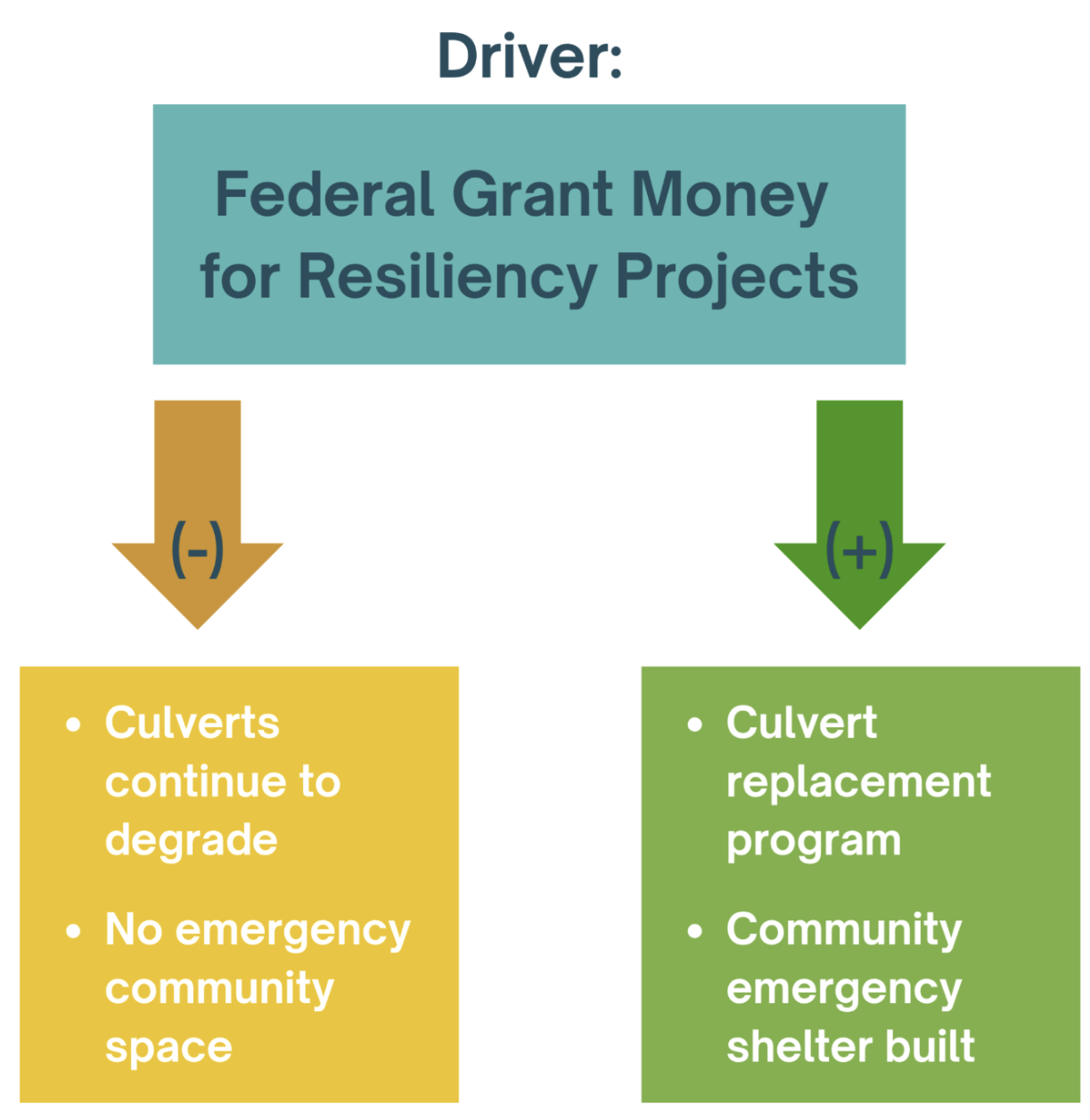
Asking this question allows planners to explore uncertainty and test a project or option against several futures and see what makes sense in all of the possibilities. Our work in the Berkshires uses exploratory scenario planning to help BRPC consider how to build resilience in an ever-changing region. The exploratory scenario planning process starts by identifying major forces external to a place that will contribute to shaping any given outcome called drivers. Drivers are the uncontrollable and uncertain forces that can dramatically change the way we currently operate. For example: an aging population, inconsistent weather patterns, a 500 year flood, another pandemic, trade route closures, cutting of grant funds, or any political shift. These high-level drivers create local outcomes.
Drivers are then considered in different directions and at different intensities. The opposite “directions” can have many implications depending on the driver and what you would like to plan for. A helpful way to visualize this is on a spectrum.
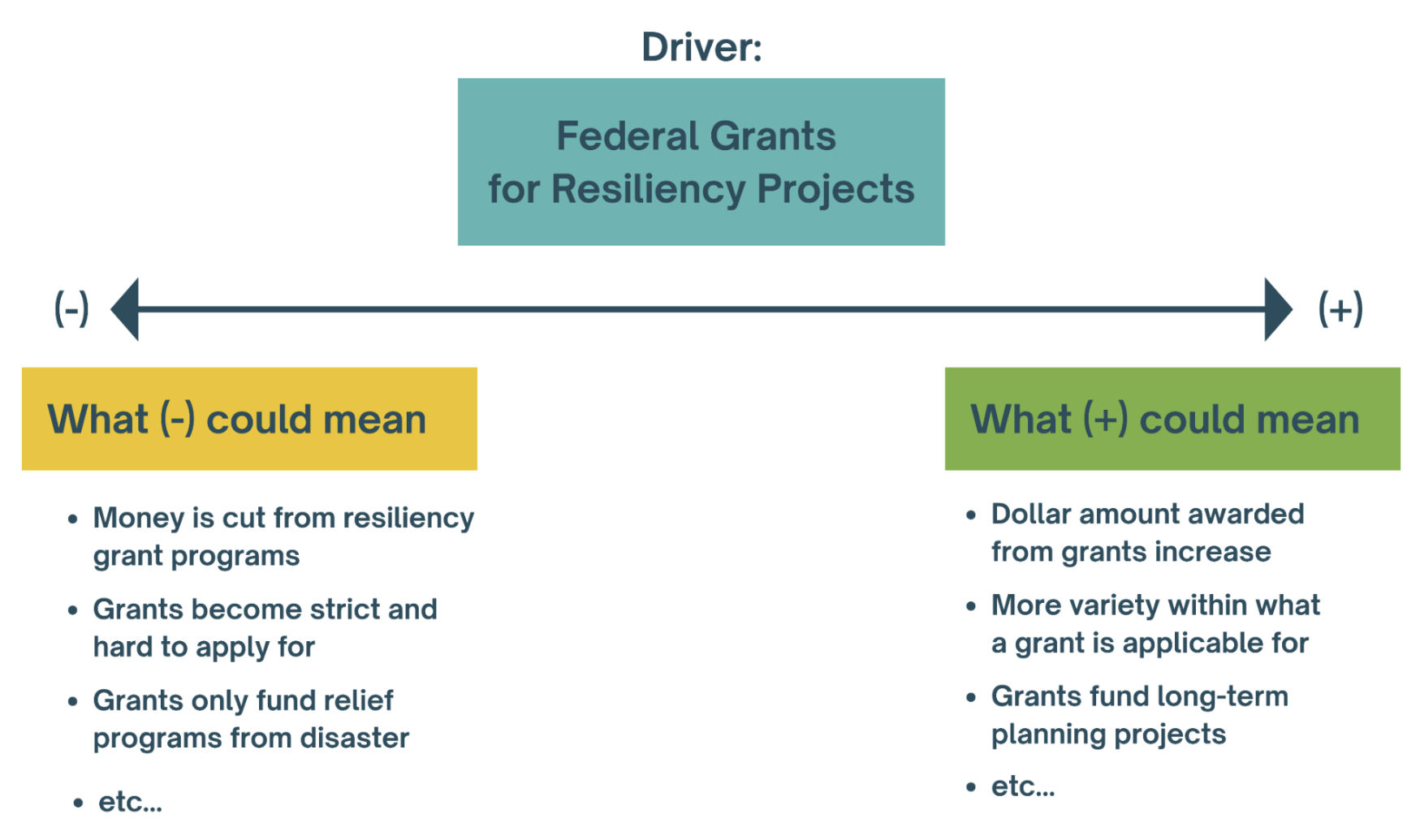
To become useful for testing plans, multiple high impact drivers are considered in multiple directions, and the overlap between them creates a story of the future. These stories are called scenarios. Scenarios allow us to see what plans and decisions are helpful and doable in whichever type of future we end up in. To add dimension to the example of federal grant funding, let’s add another driver with its own spectrum.
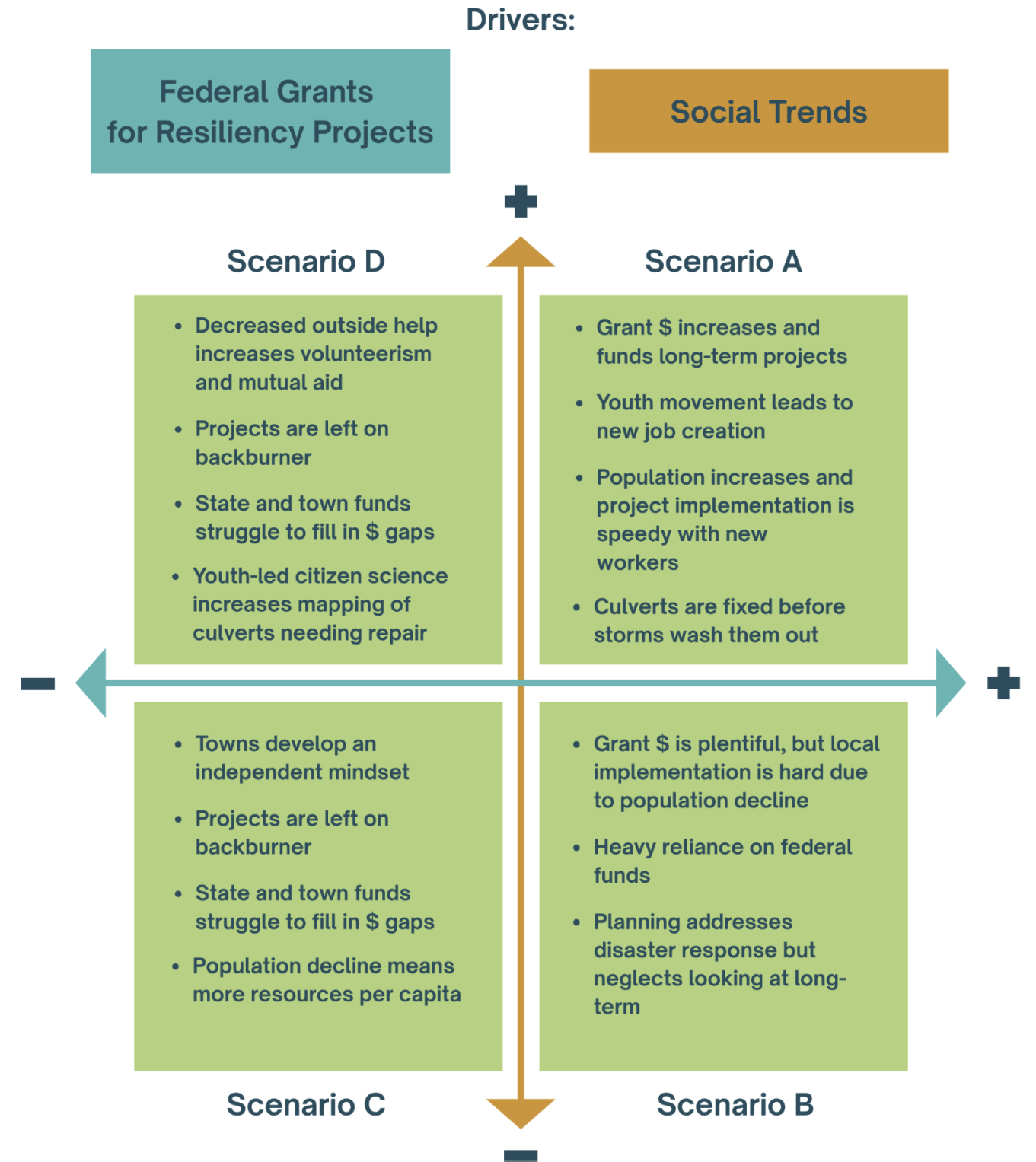
Potential projects and plans can be thought about in the context of these example scenarios. The more scenarios a project can be successful in, the more flexible, robust, and smart the investment is. Projects that work well in only a few scenarios are still valuable and can be successful. What’s most important is changing our thinking around the way we design investments, and acknowledging that what might work on our current path could be completely different on another.
Why use scenario planning for this project?
Berkshire C.A.N.! is working with BRPC to create a toolkit that will prioritize resilience projects throughout the region. A scenario planning lens guides this work by systematically considering a wide variety of possibilities and selecting projects that contribute to resilience regardless of the future.
BRPC has been awarded a two year grant from the state of Massachusetts to build resilience in the region. To do so, BRPC would like to have a framework for how to prioritize different types of projects that might contribute to that end. Scenario planning provides a systematic way to consider different options for a variety of uncertain futures, while our toolkit provides practical ways to apply a scenario planning lens.